
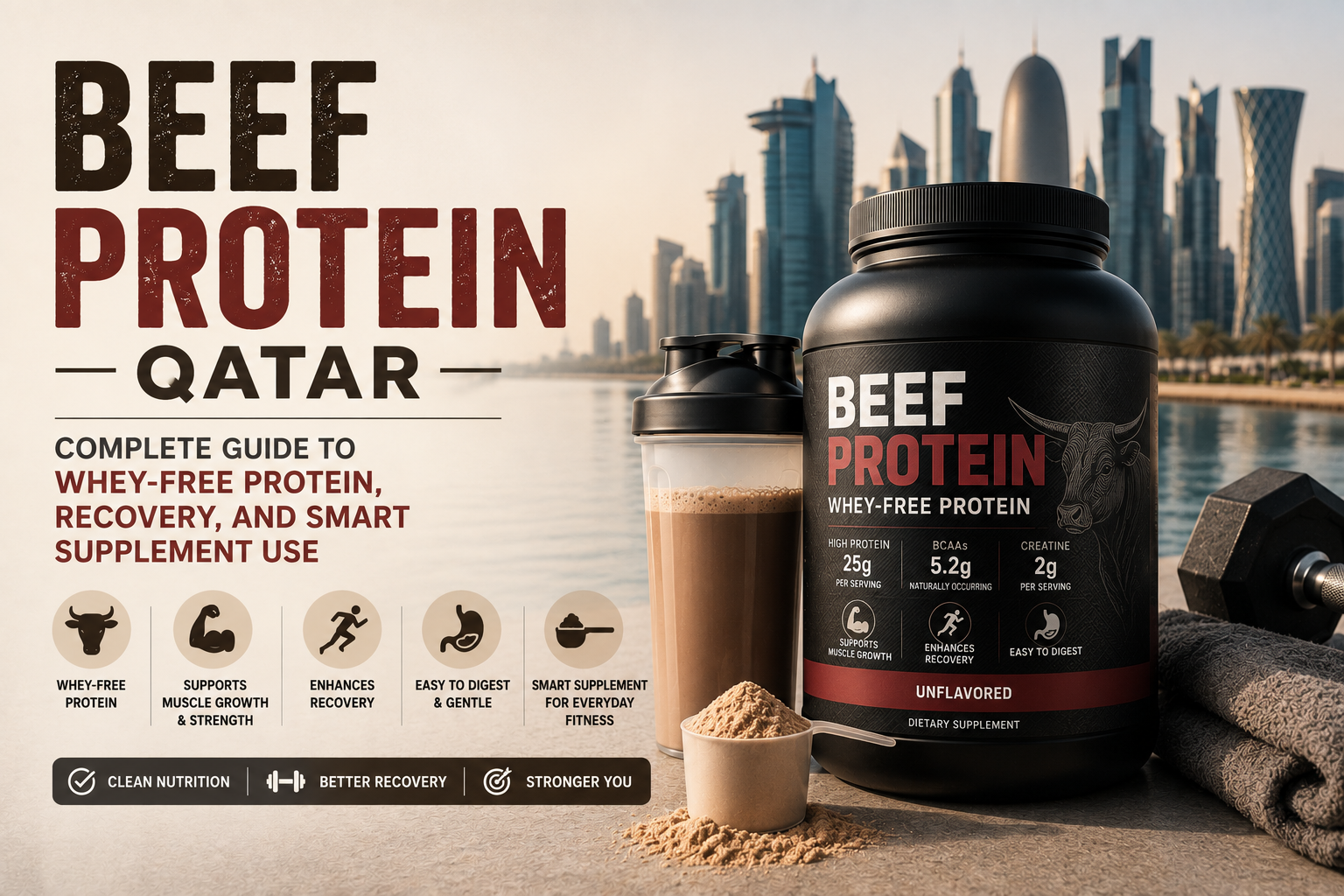
Beef Protein Qatar : Complete Guide to Whey-Free Protein, Recovery, and Smart Supplement Use
Quick Summary
- Beef protein is a protein supplement usually made from hydrolyzed beef protein isolate.
- It is often chosen by people who want a dairy-free or whey-free protein option.
- Beef protein can support daily protein intake, muscle repair, and recovery when combined with training and a balanced diet.
- The best product should have clear protein per serving, low added sugar, suitable flavors, and simple usage instructions.
- People with kidney disease, medical conditions, pregnancy, or medication use should ask a healthcare professional before using protein supplements.
Table of Contents
- What Is Beef Protein?
- Why People Search for Beef Protein Qatar
- Beef Protein vs Whey Protein
- How Beef Protein Works for Muscle Recovery
- How Much Protein Do Active Adults Need?
- When Should You Take Beef Protein?
- How to Choose Beef Protein in Qatar
- Who Should Consider Beef Protein?
- Safety, Digestion, and Label Checks
- Qatar Fitness Lifestyle: Training, Heat, and Hydration
- Conclusion
- Frequently Asked Questions
What Is Beef Protein?
Beef protein is a dietary protein supplement made from beef-derived protein. Many beef protein powders are processed into a more concentrated or isolated form, often called beef protein isolate or hydrolyzed beef protein. The goal is to provide a convenient protein source that can be mixed with water or another drink.
For people searching for beef protein Qatar, the main intent is usually commercial and educational. They want to buy beef protein locally, but they also want to know how it compares with whey, whether it is suitable for recovery, how much to take, and whether it fits their fitness routine.
Protein itself is essential for the body. MedlinePlus explains that proteins are large molecules that play many critical roles and are required for the structure, function, and regulation of tissues and organs.
Beef protein is not magic. It does not build muscle by itself. It works best when total daily protein intake, strength training, calories, hydration, and sleep are already aligned. A protein powder is a tool for convenience. It helps people meet daily protein targets when food alone is difficult, especially after training or during busy workdays.
You can start by browsing beef protein in Qatar or view the full NutriCoach supplement shop.
Why People Search for Beef Protein Qatar
People in Qatar search for beef protein for different reasons. Some are gym users who want muscle recovery. Some are athletes who need an easy post-workout shake. Some avoid whey because of dairy sensitivity. Some want a protein powder that mixes with water and fits a lean nutrition plan.
Common search questions include:
- What is beef protein?
- Is beef protein good for muscle gain?
- Is beef protein better than whey?
- Is beef protein dairy free?
- When should I take beef protein?
- Where can I buy beef protein in Qatar?
- Is beef protein good for recovery after gym?
These questions matter because users want practical guidance, not just product names. A strong beef protein blog should answer the product, nutrition, safety, and lifestyle questions in one place.
NutriCoach’s shop page lists beef protein among its product categories, and product listings include beef protein options such as Applied Nutrition Beef-XP 1.8Kg and Yava Labs beef protein products.
Beef Protein vs Whey Protein
Whey protein is made from milk. Beef protein is made from beef-derived protein. Both are used to increase protein intake, but they suit different users.
Beef protein may be considered by people who:
- Prefer a whey-free protein source.
- Avoid dairy-based supplements.
- Want a protein powder that mixes with water.
- Prefer a different digestion experience from whey.
- Want variety in their protein routine.
Whey protein may be suitable for many people, especially those who digest dairy well. NutriCoach also has a whey protein Qatar category for customers who prefer whey-based products.
The key point is not that one is always better. The better choice depends on your digestion, taste preference, dietary restrictions, training goals, and total daily protein intake.
Do not choose a protein powder based only on hype. Choose it based on:
- Protein per serving.
- Calories per serving.
- Sugar level.
- Ingredient list.
- Digestibility.
- Mixability.
- Flavor preference.
- Training goal.
- Overall diet.
How Beef Protein Works for Muscle Recovery
Training creates a need for repair and adaptation. Resistance training, sports, and intense exercise challenge muscle tissue. Protein provides amino acids, which the body uses for repair, maintenance, and growth.
Beef protein can support recovery because it helps increase daily protein intake. This is useful when you cannot prepare a full protein meal immediately after training. For example, someone leaving the gym before work may find a shake easier than cooking a meal.
A beef protein shake can be used after:
- Weight training.
- Functional fitness.
- Football.
- Boxing.
- Padel or tennis.
- Running plus strength sessions.
- Long workdays where protein intake was low.
However, the shake is only one part of recovery. Recovery also needs sleep, calories, hydration, carbohydrates, minerals, and planned rest days. A protein shake cannot replace poor recovery habits.
How Much Protein Do Active Adults Need?
Protein needs depend on body weight, training level, age, calorie intake, and goals. A sedentary adult has different needs from someone lifting weights five days per week.
The European Food Safety Authority set a population reference intake for protein of 0.83 g per kg of body weight per day for adults.
Active people often need more. The International Society of Sports Nutrition states that an overall daily protein intake of 1.4–2.0 g/kg/day is sufficient for most exercising individuals who want to build or maintain muscle mass.
Here is a simple example:
- A 70 kg person using the basic adult reference of 0.83 g/kg would need about 58 g protein per day.
- A 70 kg active gym user using 1.4–2.0 g/kg may target about 98–140 g protein per day.
- These are general ranges, not personal prescriptions.
Protein powder can help close the gap. If someone gets 90 g protein from meals but needs around 120 g, one shake may help. But if someone already gets enough protein from food, more powder may not add benefit.
When Should You Take Beef Protein?
The best time depends on your routine. The most common time is after training because it is convenient and supports recovery. Many people take beef protein within a few hours after a workout.
Useful times include:
After workouts:
Mix one serving with water or as directed on the label. This is the most common use.
Between meals:
Useful if you struggle to hit daily protein targets.
During busy workdays:
A shake can be easier than skipping protein completely.
With breakfast:
Some people add protein to their morning routine if breakfast is usually low in protein.
After evening training:
A simple shake may be easier than a heavy meal late at night.
The exact timing matters less than total daily protein, training consistency, and overall nutrition. Do not rely only on shakes. Use whole foods too, such as eggs, fish, chicken, lean meat, dairy if tolerated, legumes, and other protein-rich foods.
How to Choose Beef Protein in Qatar
Choosing beef protein should be based on label quality and practical fit.
Use this checklist:
Check protein per serving.
A good protein powder should clearly show how many grams of protein you get per scoop.
Check calories.
If your goal is lean muscle or weight management, calories matter.
Check added sugar.
Low added sugar is often better for daily use.
Check carbohydrate and fat content.
Some products are leaner than others.
Check flavor options.
Choose a flavor you can use consistently.
Check mixability.
A product that mixes well with water is useful for gym bags and workdays.
Check serving size.
Do not assume all scoops are equal. Read the label.
Check allergens and dietary notes.
If you avoid dairy, confirm the product is whey-free and check for cross-contact warnings.
Buy from a trusted Qatar-based supplement store.
Local product support matters. NutriCoach displays contact information, a Qatar phone number, email, and a Doha address on its website.
You can compare options in the beef protein category or view a product such as Applied Nutrition Beef-XP 1.8Kg, which NutriCoach lists under Beef Protein with flavor options and local pricing.
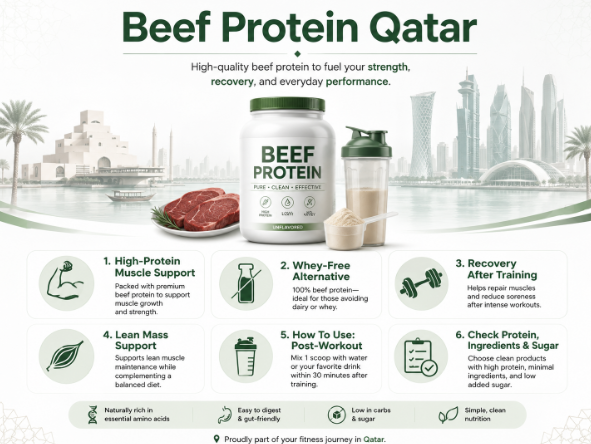
Who Should Consider Beef Protein?
Beef protein may suit:
- Adults who train regularly.
- People trying to increase protein intake.
- Gym users who want a whey-free option.
- People who prefer mixing protein with water.
- People who want convenient post-workout protein.
- Athletes who need structured nutrition support.
- Busy professionals who miss protein during the day.
It may not suit everyone. People with kidney disease, liver disease, metabolic disorders, allergies, pregnancy, breastfeeding, or medical nutrition needs should ask a healthcare professional before using protein supplements.
The FDA advises consumers to speak with a doctor, pharmacist, or healthcare professional before deciding to buy or use dietary supplements because some products may interact with medicines or other supplements.
Safety, Digestion, and Label Checks
Most healthy adults can use protein supplements sensibly, but misuse can create problems. Too much protein powder may crowd out whole foods. Some people may experience bloating or stomach discomfort. Others may choose products with too much sugar or unnecessary additives.
Use these safety rules:
- Follow the label serving size.
- Do not use protein powder as your only protein source.
- Drink enough water.
- Keep fiber intake high through vegetables, fruits, oats, beans, or whole grains.
- Do not combine many sports supplements without checking total intake.
- Stop using a product if you notice unusual reactions.
- Ask a healthcare professional if you have medical conditions.
Also check storage. Qatar’s heat can affect product quality if supplements are left in cars or exposed to sunlight. Store protein powder in a cool, dry place with the lid tightly closed.
Qatar Fitness Lifestyle: Training, Heat, and Hydration
Qatar has a strong fitness culture. Gyms, padel courts, football fields, running groups, CrossFit-style training, and indoor sports are common. National Sports Day also reinforces the role of movement in everyday life. Qatar News Agency reported that National Sports Day promotes physical activity, quality of life, and sport as a daily way of life across the country.
But training in Qatar also requires climate awareness. Outdoor activity during hot months can be demanding. Weill Cornell Medicine-Qatar warns that hot and humid summer conditions can make even easy exercise more intense on the body and increase dehydration risk if fluids are not replaced.
This matters for beef protein users because protein works best as part of a complete recovery routine. After training, you may need:
- Water.
- Electrolytes if sweating heavily.
- Protein.
- Carbohydrates.
- Sleep.
- Rest.
- A realistic training schedule.
If you train outdoors or sweat heavily, review hydration supplements in Qatar. If you want a simple gym setup, pair your protein with a shaker bottle. If your goal is strength, compare creatine supplements and use them according to label guidance.
Qatar Tribune has also covered how residents manage summer fitness by using indoor sports, air-conditioned facilities, hydration, and better sleep habits to keep moving despite heat.
Beef Protein Qatar Buying Checklist
Before buying beef protein in Qatar, ask these questions:
- Does the product clearly say how much protein is in each serving?
- Is it actually whey-free or dairy-free if that matters to you?
- Does the ingredient list match your diet?
- Is the sugar content suitable for daily use?
- Does it mix with water?
- Are the flavors practical for long-term use?
- Is the product sold by a trusted local store?
- Do you also need a shaker, hydration support, or other basics?
- Are you using the supplement to support food, not replace food?
- Have you checked with a professional if you have health concerns?
Conclusion
Choosing beef protein Qatar products should be based on your training goal, digestion, label quality, and daily protein needs. Beef protein can be a useful whey-free option for people who want convenient protein after workouts or between meals. It can support muscle recovery and lean mass goals when combined with resistance training, enough calories, hydration, and sleep.
The most important step is to use it correctly. Read the serving size. Check protein, calories, sugar, ingredients, and allergens. Do not use protein powder as a full replacement for real meals. Ask a healthcare professional if you have medical conditions or take medication.
To compare available options, visit NutriCoach beef protein Qatar or browse the full supplement shop.
Frequently Asked Questions
- What is beef protein powder?
Beef protein powder is a supplement made from beef-derived protein. It is usually processed into a concentrated powder that can be mixed with water or another drink. Many people use it as a post-workout or between-meal protein source.
- Is beef protein good for muscle gain?
Beef protein can support muscle gain if your total protein intake, calories, training, and recovery are consistent. It does not build muscle by itself. It works best with resistance training and a balanced diet.
- Is beef protein better than whey protein?
Not always. Beef protein may be better for people who avoid whey or dairy. Whey may suit people who digest dairy well. The best choice depends on your body, taste, digestion, goals, and label quality.
- When should I take beef protein?
Most people take beef protein after workouts or between meals. You can also use it when your daily meals are low in protein. Follow the product label for serving size and mixing instructions.
- Where can I buy beef protein in Qatar?
You can browse beef protein in Qatar at NutriCoach. You can also compare related products such as shaker bottles, hydration supplements, and creatine for your training routine.
Leave a comment